As much as we enjoyed relaxing on the beach, after three days in the “all inclusive” resort we were definitely getting anxious to get out and see the Real Cuba.
We didn’t have any accomadation or travel booked – just our trusty Lonely Planet guidebook to rely on. Our only constraint was we needed to be in Havana six days later for our flight home.
Leaving the Resort
We arranged a taxi to take us from the resort in Cayo Coco to the town of Ciego de Avila about 60 km away. About 20 km from the resort area, we went through what looked like a border crossing. It’s actually a checkpoint that prevents Cubans (without special permission) from traveling anywhere near the resort area. It’s quite bizzare to be in a country where we as foreigners could travel more or less anywhere, whereas the local population has restrictions on where they can and can’t go.
Our taxi driver picked up one of the police officers at the checkpoint and gave her a ride with us to her town about 30 km away! An example of the communist carpooling in action 🙂 They actually have quite a system in place for carpooling / hitchhiking. Depending on your license plate colour (not sure how this is determined?), drivers are actually obligated to stop and pick up hitchhikers. In fact, they even have officials in yellow jackets (“amarillos”) at intersections and highway junctions to facilitate rides for people.

Ciego de Avila to Santa Clara
Our taxi driver dropped us off at the bus station in the town of Ciego de Avila. Our plan was to get a bus from there to the city of Santa Clara (about 150 km up the island). Unfortunately the ticket agent at the bus station was not very helpful and didn’t have much patience for our lack of Spanish. We determined that the bus leaving that afternoon was already full and there was no bus until the next day (either that or she just didn’t want to sell us a ticket). If we had more time, we may have spent a night in Ciego de Avila and sorted out a bus for the next day; however, we were on a tight schedule on this trip so really needed to find a way to get further up the island that day.
While in the bus station deciding what to do next, an older guy came up to us offering a ride. He didn’t speak any English, but we were able to communicate well enough to arrange a ride in a private car with his friend. 60 CUC was a pretty good deal for a 150 km ride for us and the driver was certainly very happy to make that money.
Everywhere we went, we seemed to come across people that didn’t really understand that we spoke no Spanish. They’d continue to repeat themselves, not getting that we just weren’t going to be able to understand. It was quite comical and at times frustrating.
The drive to Santa Clara was quite fascinating. Not a lot of traffic on the road, other than old trucks and farm vehicles from the 50’s / 60’s and a lot of revolutionary slogans on the side of the road.


Arriving in Sanata Clara
We got dropped off in central Santa Clara and set out to find a Casa Particular (private home) to stay in. The first couple we tried didn’t work out; however, we ended up finding a great one that wasn’t in the guidebook (but should be – it’s a prime location!) called “Hostel Santa Clara” in the home of Miguel and Noely. We had a nice big room in an old colonial house with a balcony overlooking Parque Vidal (the main square in the center of Santa Clara).
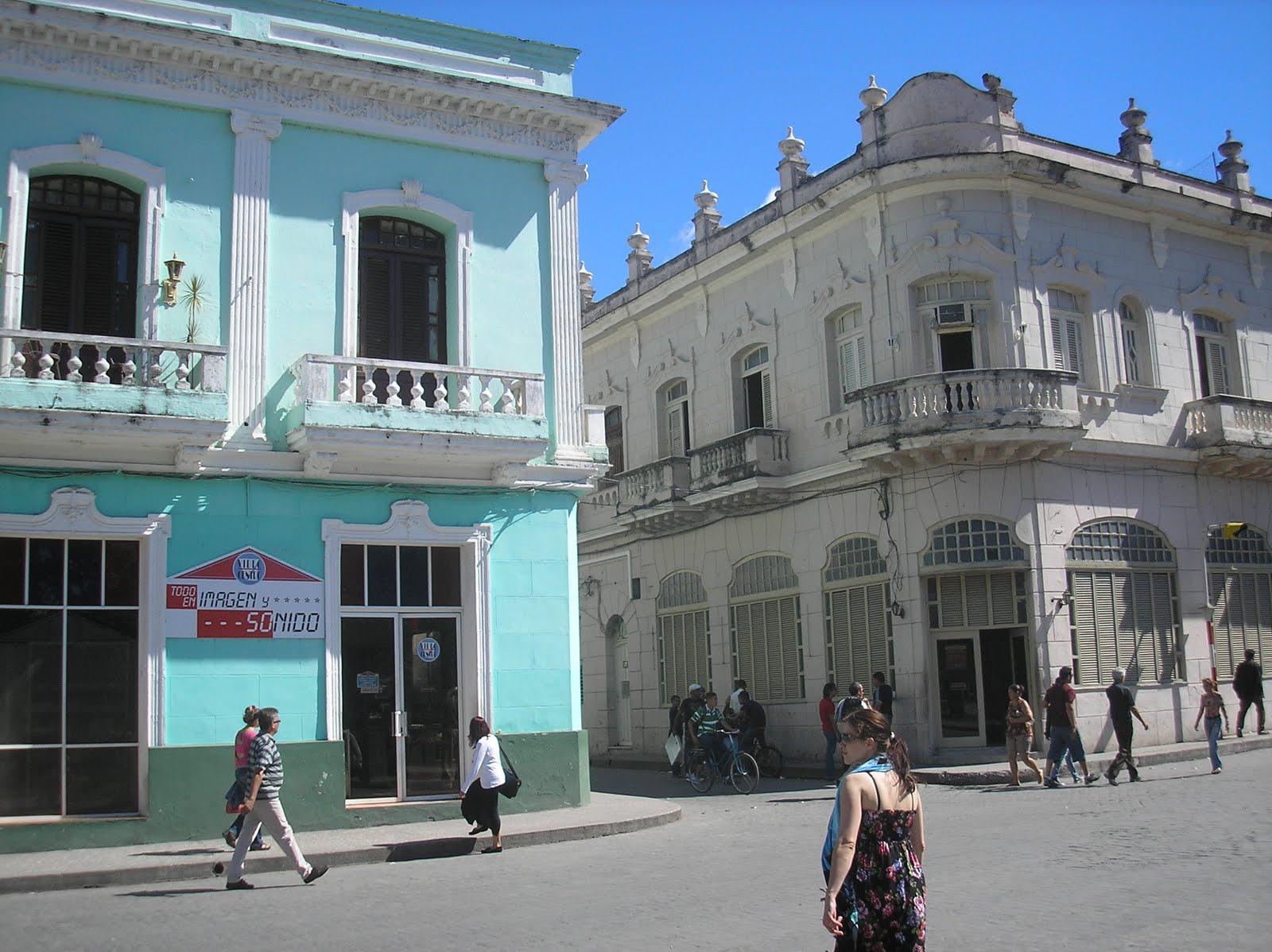
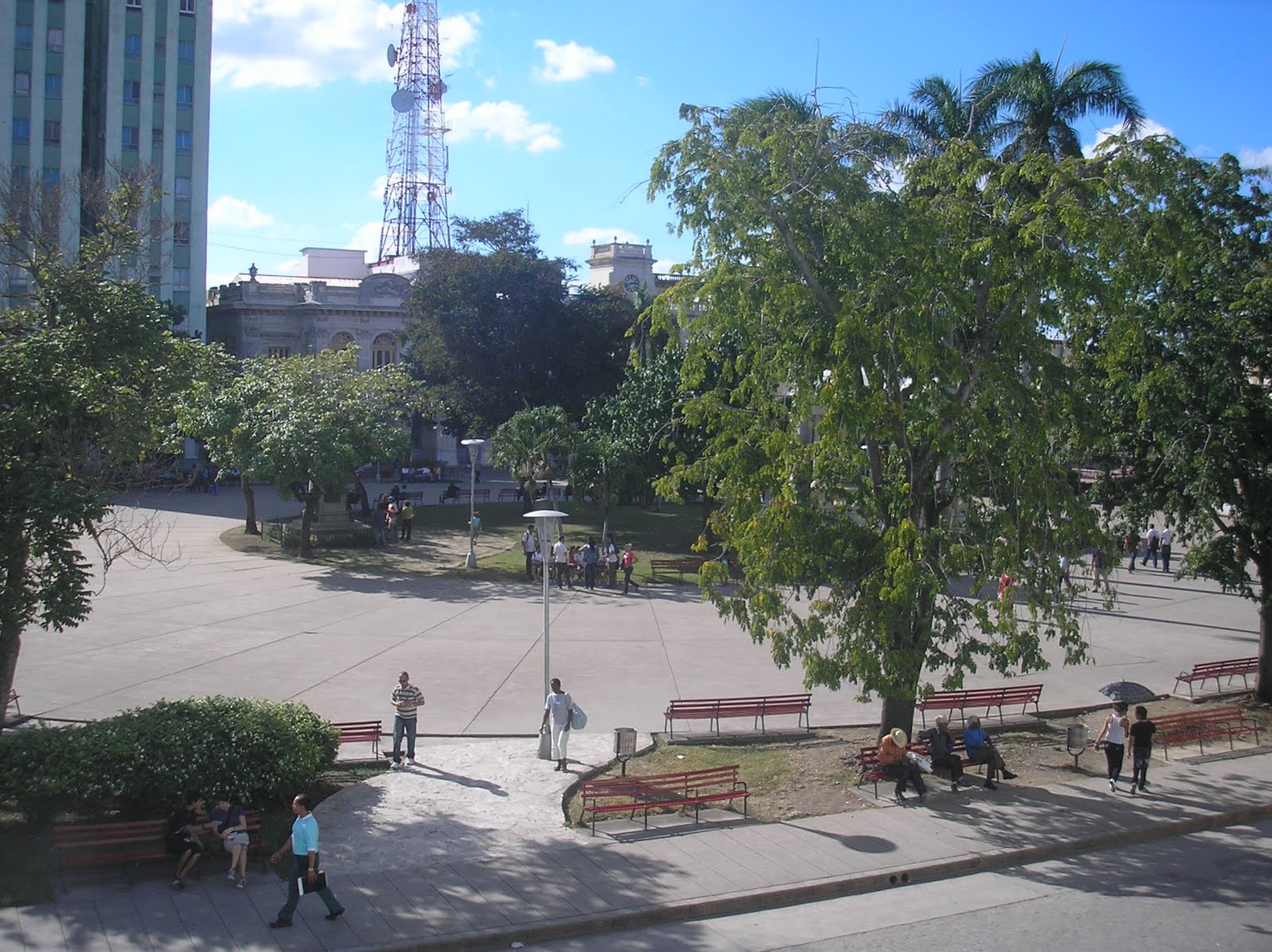
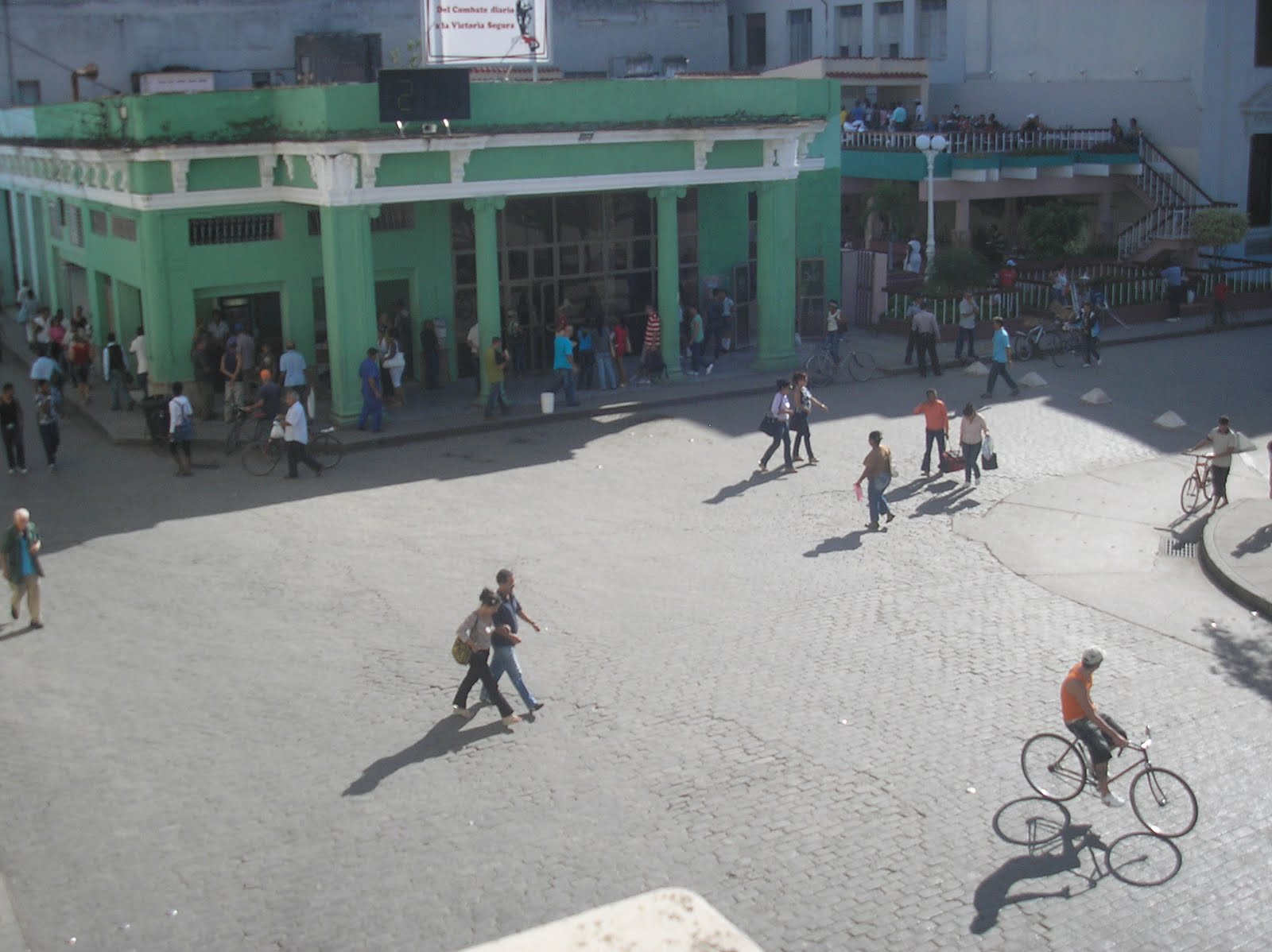

We visited the local museum. It consisted of about 5 small rooms and had over 20 people working there! All in uniforms, many sitting around and a different person to turn the lights on and off in each room that we entered. Certainly keeps everyone employeed, but not terribly efficient!

Tobaco Factory Tour
We took a factory tour in Santa Clara (we were the only two on the tour!). Unfortunately we weren’t allowed to take any pictures — the security guard that followed us around made sure we didn’t break that rule.
Everything in the factory was done manually – not just the rolling, but sorting, labelling, and boxing. Even all of their records were hand written – not a computer to be seen anywhere.
The hand rollers worked very fast and apparently crank out 70 to 150 cigars per day depending on their level of experience.
Throughout the factory were pictures of Che and Fidel and posters with revolutionary slogans. While we were there, an older man sat down at a wooden desk at the front of the factory floor and started reading out the daily propaganda newspaper over the PA system!
 Liam Kerney